

A comfortable office for a small company is a workspace that meets basic health and safety standards, matches the team’s size, and does not strain the cash flow of a still-growing business. For teams of 3 to 15 people, comfort has less to do with fancy interior design and more to do with adequate lighting, decent air circulation, and an office type that fits how the team actually works day to day.
Key Takeaways
- Indonesia’s official office comfort standard, Permenkes No. 48 of 2016, sets room temperature at 23-26°C and humidity at 40-60%.
- Under PP No. 7 of 2021, a small business is defined as having business capital of Rp1-5 billion, or annual revenue of Rp2-15 billion, excluding land and buildings.
- The three office types most relevant to small teams are virtual offices, coworking spaces, and serviced offices, each with a different price point and level of commitment.
- An office that is too cramped, poorly ventilated, or hard to reach directly affects productivity and staff turnover.
What Comfort Standards Apply to Offices in Indonesia?
Office comfort is not purely a matter of taste. Indonesia’s Ministry of Health sets minimum standards through Permenkes No. 48 of 2016 on Occupational Health and Safety Standards for Offices, which applies to every office in the country regardless of headcount.
Under Article 2 of the regulation, the standard exists to create offices that are healthy, safe, and comfortable for employees. A few points are especially relevant for small companies choosing their first office:
- Temperature and humidity. A comfortable room temperature sits between 23°C and 26°C, with humidity between 40% and 60%.
- Office ergonomics. Desks, chairs, and equipment layout should suit employees’ posture and daily tasks to prevent physical fatigue.
- Lighting and noise. Workspaces need adequate lighting and noise levels that do not disrupt concentration.
- Basic building facilities. This includes proper toilets, clean water access, and clear evacuation routes.
Small companies often assume this standard only applies to large corporations. In practice, it applies nationally to every office, government or private, regardless of business scale.
What Size Category Does Your Business Fall Into Before Setting an Office Budget?
Before settling on an office budget, it helps to first confirm where your business officially stands. Under Article 35 of PP No. 7 of 2021, Indonesian businesses are classified by business capital or annual revenue, replacing the older net-worth-based criteria.
| Business Scale | Business Capital (excluding land and buildings) | Annual Revenue |
|---|---|---|
| Micro | Up to Rp1 billion | Up to Rp2 billion |
| Small | Rp1-5 billion | Rp2-15 billion |
| Medium | Rp5-10 billion | Rp15-50 billion |
Knowing where your business sits on this table helps set a realistic office budget. Micro businesses usually fit better with a virtual office or coworking space, while small businesses with an established team start to make sense for a serviced office with dedicated physical space.
What Should You Check When Surveying an Office for Comfort?
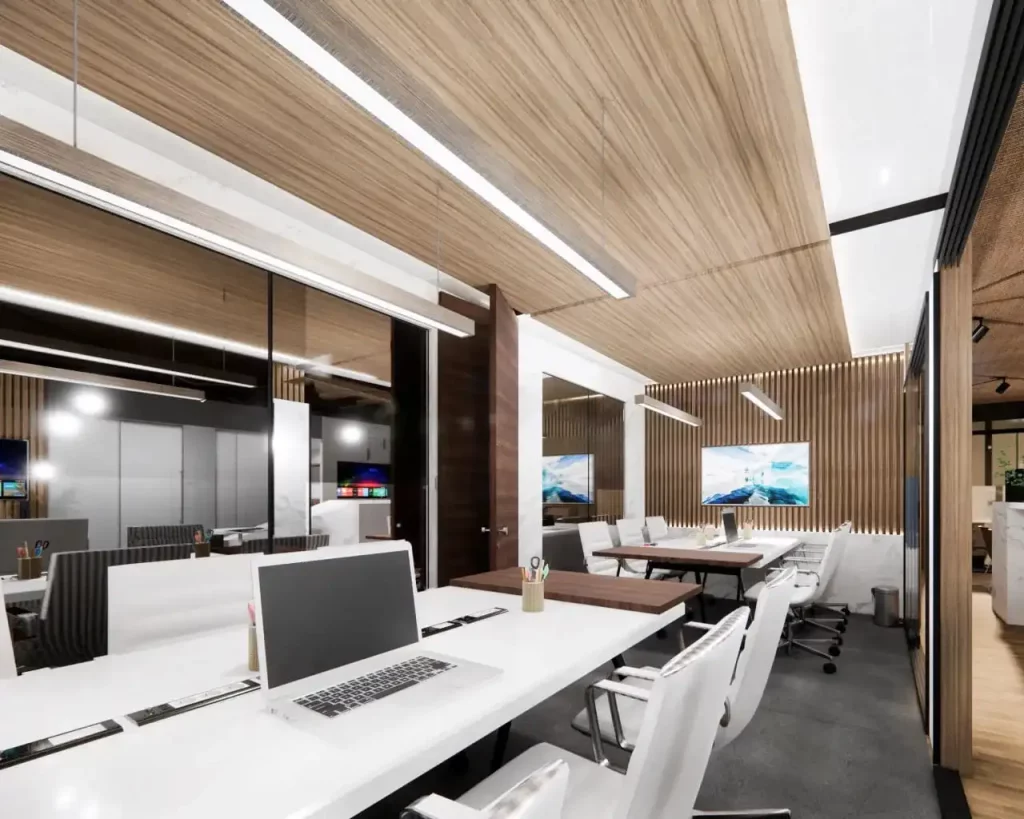
Brochure photos rarely reflect the real condition of an office. Before signing a lease, visit in person and check these four things.
Lighting and Air Circulation
Stand at the desk farthest from any window and notice whether natural light still reaches it. Check whether the air conditioning covers the whole room evenly, not just the area near the unit.
Furniture Ergonomics
Sit in the chairs provided for a few minutes. A chair that is too low or a desk that is too high will feel uncomfortable after hours of use, even if it looks fine at a glance.
Access and Location
Check the distance to public transport and traffic conditions during rush hour. A location that looks strategic on a map can be a real headache at 8 a.m. or 5 p.m.
A Presentable Meeting Room
For small teams that meet clients regularly, check the capacity and equipment of the available meeting rooms. Read Also: Criteria for a Good Meeting Room.
Notes from vOffice Consultants
Clients renting their first office often fixate on how the lobby looks, but the complaint that tends to surface later is limited meeting room hours. Ask upfront how many hours are included per month before signing, rather than finding out mid-contract that the quota has run out.
Virtual Office, Coworking Space, or Serviced Office: Which Fits a Small Team?
These three office types serve different needs. It is not about which one is objectively better, but which one matches how your team actually works right now.
| Office Type | Best For | Lease Commitment |
|---|---|---|
| Virtual Office | Remote-first teams that mainly need a legal address and occasional meeting room access | Flexible, starting from annual |
| Coworking Space | Teams that want daily workspace plus networking opportunities with other businesses | Monthly to annual |
| Serviced Office | Teams that need dedicated, private workspace under their own company identity | Monthly, without long-term lock-in |
For teams not yet sure they need physical space every day, starting with a legal address makes more financial sense. For this need, vOffice’s Virtual Office service provides a business address in Grade A buildings with access to more than 40 locations across Indonesia, including a monthly meeting room quota for client visits.
Read Also: Alternative Office Solutions for Small Law Firms
Check out vOffice’s location options for virtual offices in Indonesia that are legally recognized for business registration:
- Virtual Office Jakarta
- Virtual Office Tangerang
- Virtual Office Bekasi
- Virtual Office Surabaya
- Virtual Office Bali
- Virtual Office Medan
- Virtual Office Bandung
- Virtual Office Batam
Not Sure You Need Physical Space Every Day?
Start with a legal business address, no full office commitment needed.
How Much Does a Comfortable Office Cost for a Small Company?
Office costs vary widely by type and location. As a benchmark, entry-level virtual office packages typically start around Rp6-7 million per year for a basic legal address, while packages with more physical workspace hours run around Rp12-15 million per year. Full package details are available in the vOffice Virtual Office Pricing Guide.
For a serviced office, cost is usually calculated per seat or per room per month, and runs higher since it includes full physical workspace, furniture, and daily front-desk service. The exact figure depends on the building’s location and how many additional facility hours are included.
Notes from vOffice Consultants
Many small business owners compare offices purely on the monthly rental figure, then get caught off guard by extras like electricity, service charges, or per-hour meeting room fees. Ask what’s already included before comparing two offers, since the cheaper-looking number can end up costing more once the extras are added.
What Are the Risks of Choosing an Office That Does Not Fit Your Team?
A cramped or poorly ventilated office is not just an inconvenience. In practice, it affects small business operations in several concrete ways.
- Lower productivity. A stuffy or noisy space tires employees out faster and makes it harder to focus on tasks that need concentration.
- Higher turnover. An uncomfortable work environment is a common reason employees start looking elsewhere, especially in cities with plenty of other office options.
- Hidden costs pile up. An office that is too small from the start often forces a business to rent extra space on short notice, usually at a higher rate than upgrading to a larger package from day one.
- Weaker client impression. For businesses that regularly host clients, an unpresentable office can affect how professional the business appears to prospects.
Read Also: Complete Guide to Choosing an Office in Jakarta
Renting an office that matches your team’s current size, with room to upgrade as the business grows, is usually cheaper in the long run than moving offices repeatedly because the space never quite fit.
Ready for an Office That Fits Your Team’s Size?
ISO 9001 certified, trusted by 50,000+ clients across 40+ locations in Indonesia.
References
1. Ministry of Health of the Republic of Indonesia. (2016). Regulation of the Minister of Health No. 48 of 2016 on Occupational Health and Safety Standards for Offices. BPK RI. Retrieved from
https://peraturan.bpk.go.id/Details/113097/permenkes-no-48-tahun-2016
2. Government of the Republic of Indonesia. (2021). Government Regulation No. 7 of 2021 on Ease, Protection, and Empowerment of Cooperatives and Micro, Small, and Medium Enterprises. BPK RI. Retrieved from
https://peraturan.bpk.go.id/Details/161837/pp-no-7-tahun-2021