

A coworking space is a physical workplace shared by individuals and teams from different businesses. Two common seating arrangements are hot desks, where people use available desks on different visits, and dedicated desks, where one desk is assigned to a particular user for an agreed period.
Key Takeaways
- Coworking provides a place to work, but the desk, access hours, and facilities you receive depend on your booking.
- A hot desk is shared between users. A dedicated desk is assigned to you, although storage rights must still be confirmed.
- A day pass or monthly membership describes access duration; neither automatically promises a permanently assigned seat.
- Shared seating has privacy limits. Confirm a separate room before confidential calls or team discussions.
How a Coworking Space Works

In coworking, independent professionals and company teams use a managed work environment. The operator sets rules for seating, entry, shared amenities, visitors, and room bookings. You bring your work and equipment, and use the space under the terms of your pass or membership.
A traditional office is normally occupied under a lease or other arrangement for space controlled by one company. Coworking can spare a small team from managing an entire workplace, but people must share facilities and respect other users. A café is another option for some tasks; however, buying coffee does not establish a right to a desk for a full workday. Our comparison of coworking and cafés for working in Indonesia looks at practical access and working costs.
Coworking has become useful for freelancers, consultants, remote employees, and project teams. The experience depends less on the label than on the workspace rules: where calls are permitted, how seating is assigned, and whether there is somewhere suitable for private discussion.
Hot Desk vs Dedicated Desk in Coworking
A hot desk is an available desk used by different people over time. Hot desking refers to that shared-seating arrangement. Some providers let members choose an open seat on arrival; others require reservations or tell you which desk to use. Neither process makes it your permanent desk.
Consider a consultant visiting a coworking location in Jakarta twice a week. They carry a laptop, sit at an authorized desk, and clear it when leaving. If a colleague joins them, they should request two seats together rather than assume adjacent desks will remain free.
Dedicated Desk: One Assigned Workstation
A dedicated desk is allocated to a named user for an agreed period. It can be useful when you attend regularly and prefer to work from the same position with a monitor or other equipment. Yet it remains a desk within a shared environment. Assignment alone does not provide an enclosed room or protect conversations from being overheard.
Ask whether you may leave equipment on the desk, whether a locker is included, and what happens when the membership ends. Those are contractual and operational questions. Do not treat the word dedicated as a promise of secure storage or round-the-clock access.
Private Room: Enclosed Space for a Team
Private rooms are a separate workspace category, useful for teams that need a defined area and greater control over discussions. Availability, room capacity, acoustic privacy, and contract terms differ by location. A growing team may also compare this arrangement with a serviced office instead of assuming all coworking packages include private space.
| Feature | Hot Desk | Dedicated Desk | Private Room |
|---|---|---|---|
| Allocation | A shared desk selected or assigned per visit | One assigned desk | An agreed enclosed room |
| Conversation privacy | Limited | Still limited | More separation; acoustic conditions must be checked |
| Overnight equipment | Usually removed after a visit | Only if permitted | Subject to room terms |
| Typical use | Irregular individual visits | Frequent individual work | Regular confidential teamwork |
Desk Sharing, Reservations, and Seat Availability
Under a desk-sharing system, several people use the same workstation at different times. Providers can administer this through reservations, staff allocation, or first-available seating. A photograph of empty desks cannot tell you which system applies at your chosen site.
- Seat confirmation: determine whether your booking guarantees an available seat, reserves a particular desk, or grants access subject to capacity.
- Permitted hours: confirm entry, exit, re-entry, and any limits on weekends or public holidays.
- Group bookings: request enough seats for everyone and check whether colleagues can sit together.
- Schedule changes: ask about late arrivals, cancellation windows, and moving a booking to another date.
A day pass addresses how long you may use a workspace. A monthly subscription describes the billing or membership period. Neither defines the desk arrangement by itself. For a practical example of preparing a short visit, see the guide to booking a daily coworking workspace in Jakarta.
Storage Rules and a Clean-Desk Routine
Desk allocation matters when you work with an external display, papers, or other accessories. At a hot desk, plan to remove your items before leaving. At a dedicated desk, a provider may permit certain equipment to remain in place, but that permission should be confirmed rather than inferred.
Check locker availability, equipment liability, who can enter the area, and the procedure for forgotten items. Keep confidential customer documents and devices under your organization’s security rules. An assigned seat is not a substitute for controlled storage.
Designing for Collaboration without Losing Privacy
Shared working areas can support quick conversations and project collaboration. Those same discussions can interrupt someone preparing a report or joining a client call. Useful layouts separate quiet workstations from collaborative zones and provide meeting rooms or call spaces where available. As a prospective user, inspect the actual arrangement and ask what activities each area permits.
Headphones prevent you from broadcasting the other party’s audio through speakers, but colleagues nearby can still hear you speak. For negotiations, employee matters, customer information, or a group video meeting, ask about an enclosed room. A closed door also does not guarantee sound isolation, so inspect the room if confidentiality is important.
Notes from vOffice Consultants
When discussing coworking access, share two separate requirements: when you need a desk and when you need to speak with clients. Give the branch the expected call duration and number of people joining in person. Staff can then check the appropriate areas and reservations without assuming a desk pass includes a private meeting room.
Facilities and Benefits That Matter for Your Workday

Work desks, Wi-Fi, power outlets, printers, refreshments, lounges, and meeting rooms are examples of facilities people look for. Their value depends on the tasks you bring. A ready-to-use desk can reduce setup work, while shared facilities give an independent professional the opportunity to work alongside people from other businesses. Neither guarantees productivity or networking outcomes.
vOffice’s coworking service pages list desks, Wi-Fi, coffee and tea, printing, and supporting facilities. Check which items your particular plan includes, whether usage allowances apply, and what is available on your visit date. Our coworking selection guide explains how to assess connectivity, seating, and room access before committing.
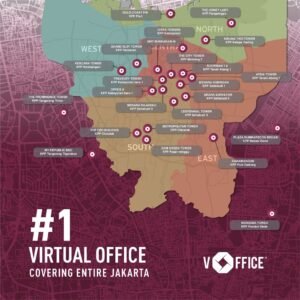
The operator’s track record and the ability to inspect a location also matter when choosing a workplace. vOffice reports more than 20 years of experience and a network of over 40 business service locations across Indonesia. These figures describe the wider vOffice network, not the number of branches offering hot desks or dedicated desks. You can review building footage through the vOffice Tour Center, then confirm coworking availability, facilities, and access conditions at the branch you prefer.
Check out the various strategic locations for Coworking Spaces in Indonesia from vOffice below:
- Coworking Space Jakarta
- Coworking Space Tangerang
- Coworking Space Bali
- Coworking Space Surabaya
- Coworking Space Bekasi
- Coworking Space Medan
Which Workspace Fits Freelancers, Consultants, and Small Teams?
A freelancer who needs one quiet day each week and a consultant who takes confidential calls four days a week are buying very different types of access. Start with the work rather than the package name.
| Work Pattern | Option to Consider | Check Before Booking |
|---|---|---|
| Freelancer with occasional independent work | Hot desk or day pass | Seat availability, hours, power, total visit cost |
| Consultant with regular work and extra equipment | Dedicated desk, if offered | Desk assignment, monitor rules, storage |
| Project team meeting on selected days | Several shared desks plus a bookable discussion room | Adjacent seats, room times, combined cost |
| Team regularly handling confidential information | Checked private workspace | Acoustic privacy, access, room capacity, storage |
Freelancers can use this guide to building a practical coworking routine in Indonesia to match workdays to actual assignments. Coworking is also used by businesses outside the technology sector, as discussed in our article on industries and professions that use coworking spaces.
Coworking Space vs Virtual Office vs Traditional Office
Coworking provides physical desks under shared-use rules. A virtual office primarily supplies a business address and administrative support under the relevant agreement, not a desk you may occupy every day. A traditional office gives its occupant use of defined space under a separate contractual arrangement.
If you are setting up a company in Indonesia, do not assume a coworking pass gives you the right to register its address for a deed, tax records, or Indonesia’s Online Single Submission (OSS) business licensing system. That requires a separate review of the address, the business activity, and the documentation. Our article on what a virtual office means in Indonesia addresses the registered-address question in more detail.
For investors or foreign founders, it is useful to distinguish three decisions: where the company is registered, where individuals work, and where confidential meetings take place. These can involve separate services and contracts. The overview of office types and functions in business gives broader context to this distinction.
vOffice offers several service categories for these different needs. A vOffice meeting room may suit a private presentation or client discussion, while a serviced office may be worth considering when your team needs an enclosed workplace on a regular basis. Each option has its own availability, pricing, and contractual terms; a coworking membership does not automatically include them.
Compare Total Cost and Access Terms
Compare quotes for the same number of users, desk type, and access hours. A monthly membership may be unsuitable for someone visiting only occasionally. Multiple day passes can cost more when a person comes in regularly. Your attendance calendar is a better starting point than the price shown for an unused day.
Ask about printing allowances, visitor registration, call rooms, meeting room fees, changes of date, and any taxes or charges outside the stated price. This daily versus monthly coworking comparison shows why you need equivalent inclusions before estimating your total.
Notes from vOffice Consultants: Compare Two Quotes
Ask for comparable quotes at the same location: a hot desk plus separately booked meeting room time, and an assigned desk if available with any room charges shown. Include the days you expect to attend, permitted hours, storage terms, and extras. This makes it easier to assess the real cost of your work pattern rather than comparing headline package prices.
Before the first visit, keep the building address, booking confirmation, access hours, and the equipment you will use together. You can follow the more detailed preparation guide below.
Also Read: What Should You Bring and Check on Your First Day at vOffice Coworking?
Review vOffice Coworking Options for Your Schedule
Once you know whether you need shared seating or a regularly assigned desk, verify the options offered at the branch you plan to visit. The vOffice Coworking Space service page is a useful starting point for workspace features and enquiries. Ask specifically about dedicated desk availability rather than assuming every coworking branch offers that arrangement.
Not Sure Which Desk Arrangement to Choose?
vOffice has served over 50,000 clients. Check desk types and access terms with your chosen branch.
- vOffice Indonesia. (n.d.). Coworking Space. Accessed November 4, 2026, at https://voffice.co.id/en/services/coworking-space
- vOffice Indonesia. (2026). Compare Coworking Day Passes and Monthly Plans for Your Work Schedule in Indonesia. Accessed November 4, 2026, at https://voffice.co.id/blog/en/daily-or-monthly-coworking-space/
- vOffice Indonesia. (2026). What Should You Bring and Check on Your First Day at vOffice Coworking? Accessed November 4, 2026, at https://voffice.co.id/blog/en/preparation-for-your-first-day-at-coworking-space/
- vOffice Indonesia. (2026). What Is a Coworking Space? Definition, Benefits, and How It Differs from a Virtual Office. Accessed November 4, 2026, at https://voffice.co.id/blog/en/definition-of-coworking-space/
- vOffice Indonesia. (n.d.). vOffice Tour Center. Accessed November 4, 2026, at https://voffice.co.id/tour-center
- vOffice Indonesia. (n.d.). Meeting Room. Accessed November 4, 2026, at https://voffice.co.id/en/services/meeting-room