
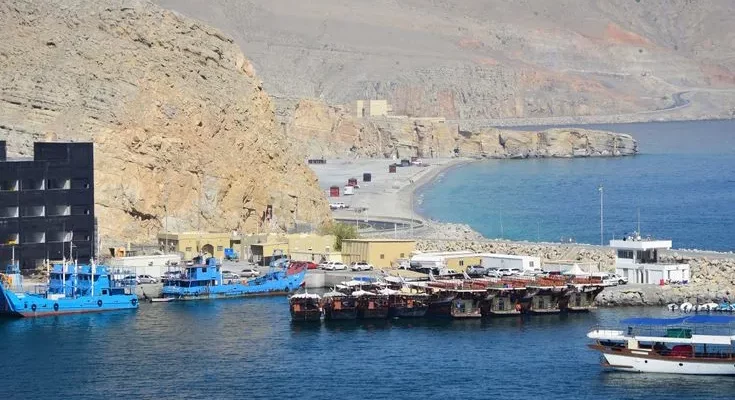
The Strait of Hormuz is the narrow waterway between Iran and Oman that carries about a fifth of the world’s seaborne oil trade, and since late February 2026 it has been at the center of a conflict that has made many prospective investors pause on their Dubai plans.
Key Takeaways
- The Strait of Hormuz crisis is real. It began on February 28, 2026, and briefly shut down UAE stock trading and parts of regional shipping.
- Dubai International never had a network-wide closure. Specific routes to Iran, Iraq, and Tel Aviv were suspended, not the Dubai hub itself.
- UAE banking assets kept growing through the crisis, and Dubai’s property market hit record transaction volumes in June 2026.
- The UAE Central Bank cut its 2026 growth forecast to 1.7 percent, real impact, but nowhere near collapse.
- The Strait has partially reopened since June 2026, with a ceasefire scenario hoped for by the end of July.
This article is for informational purposes only, based on public data as of mid-July 2026, and does not replace professional risk analysis for your own investment decisions.
What Is the Strait of Hormuz, and Why Does It Keep Making Headlines?
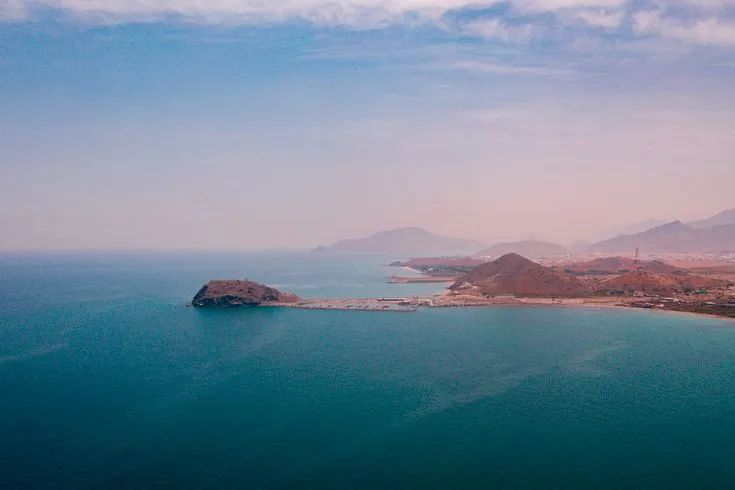
The Strait of Hormuz is a shipping lane roughly 33 kilometers wide at its narrowest point, connecting the Persian Gulf to the Arabian Sea. Because about a fifth of the world’s oil and liquefied natural gas transits this route, any disruption there moves global energy prices and makes news instantly. Since February 28, 2026, tensions escalated sharply after conflict broke out between the United States, Israel, and Iran, triggering tanker attacks, sea mines in the strait, and a US naval blockade of Iranian ports.
It is entirely reasonable for a prospective investor to feel uneasy reading that. What often gets missed is that Dubai sits geographically close to the conflict zone, but operationally and economically, it occupies a very different position from Iran or the active combat zones.
What Actually Happened Since February 2026?
An honest answer has to acknowledge this was a real event, not a minor ripple. The Abu Dhabi Securities Exchange and Dubai Financial Market both closed trading for two days in early March 2026 to prevent panic selling after Iranian strikes on regional ports and tankers. More than 11,000 flights across the Middle East were cancelled in the days following the US and Israeli strikes on Iran in early March. War-risk insurance premiums for vessels transiting the region reportedly jumped around 50 percent.
Emirates did temporarily suspend flights to Tehran, Baghdad, Basra, and Beirut, and Etihad suspended its Abu Dhabi-Tel Aviv route. What matters for a business decision is what was suspended: routes to countries directly involved in the conflict, not Dubai International or Zayed International as hubs. UAE airports stayed open throughout the crisis, though they operated at reduced capacity for a few days during the sharpest escalation in early March.
Not Sure Whether Now Is the Right Time to Expand?
vOffice, an Official Dubai Chamber Partner, helps you weigh the real risks and opportunities before you commit capital.
Where Does Dubai Stand as of July 2026?
The most recent data shows a far calmer picture than March’s peak. The Strait of Hormuz has partially reopened since June 2026, and UAE oil exports have returned to near full capacity. The UAE’s non-oil Purchasing Managers’ Index stayed above the 50 expansion threshold throughout the conflict, with Dubai’s PMI at 50.7 in June, down from 52.0 in May but still in growth territory.
The banking sector actually strengthened. Total UAE banking assets rose to more than Dh5.4 trillion in early 2026, with steady credit growth. Moody’s reaffirmed the UAE’s Aa2 rating with a stable outlook in March 2026, and S&P Global Ratings maintained its AA/A-1+ rating, citing strong fiscal buffers and economic resilience.
Dubai’s property market hit records. June 2026 saw 40,022 rental contracts registered across Dubai, the highest monthly total ever recorded, while sales transactions reached 13,933 deals worth AED33.2 billion in the same month. That is not the behavior of a market investors are fleeing.
There were real consequences too. The UAE Central Bank cut its 2026 real GDP growth forecast from 5.6 percent to 1.7 percent in early July, citing temporary impacts from regional geopolitical developments on trade, tourism, and shipping. That is not a number to wave away, but it is far from a recession or business exodus scenario.
Also read: 100% Foreign Ownership in Dubai: What Changed in 2026 and What It Means for Investors
Flight Disruptions vs. Dubai as a Hub: What’s the Difference?
This is the most commonly misunderstood point. As of July 13, 2026, Emirates, Etihad, and flydubai continued running passenger operations across the UAE. Dubai International and Zayed International remained open, with airlines adjusting routings around restricted airspace. No UAE carrier had announced a network-wide suspension as of that date. What happened was rerouting and longer flight times to avoid Iranian airspace, not a hub shutdown.
The distinction matters for business decisions: routes into countries directly involved in the conflict were genuinely risky and were suspended. Dubai as a base for company registration, banking, and operations continued functioning throughout the crisis, with disruption largely confined to a few days at the peak of escalation in early March.
Worried About Capital Getting Stuck If Things Flare Up Again?
A vOffice Free Zone structure gives you flexibility to enter or exit without rigid long-term commitments.
Geopolitical Noise vs. Real Operating Risk: How to Tell the Difference
None of this means every concern about Hormuz is baseless. Higher marine insurance costs, potential fuel price spikes, and financial market volatility are real risks affecting cost of living and operations across the Gulf, including the UAE. What matters is separating what actually disrupts day-to-day business in Dubai from what is short-term market sentiment.
A practical checklist: does the bank you plan to open an account with remain fully operational? (Yes, UAE banking grew throughout the crisis.) Has the government restricted foreign business access? (No, 100 percent foreign ownership remains intact.) Is the main logistics hub still functioning? (Jebel Ali saw congestion from diverted vessels but kept operating as the region’s largest transshipment hub.)
Note from vOffice’s Dubai consulting team, Official Dubai Chamber Partner: clients asking about Hormuz tend to feel reassured once they see that bank account opening and residency visa processing continued normally throughout the conflict. What changed wasn’t whether Dubai works as a business base, but the value of choosing a company structure flexible enough to handle another regional flare-up.
Also read: Business Opportunities in Dubai: 9 High-Growth Sectors and How to Enter the Market
What Smart Entrepreneurs Are Doing Right Now
Entrepreneurs who kept moving forward with Dubai plans during the crisis generally did three things. First, they chose Free Zone structures for businesses built around global invoicing rather than physical Gulf trading, since that model carries far less exposure to shipping disruption. Second, they completed corporate bank account opening early instead of waiting for “100 percent safe,” since UAE banks kept processing applications normally throughout. Third, they leaned on diplomatic momentum: the UAE actively pushed for de-escalation while maintaining trade ties with all sides, including lifting its Lebanon travel ban in late June 2026, a signal that regional normalization is underway.
Waiting for total certainty rarely pays off in any market. See vOffice’s complete guide to registering a business in Dubai and the full Dubai company setup cost breakdown to understand which structure fits your plans.
Ready to Decide Based on Data, Not Fear?
Trusted by 50,000+ clients, vOffice guides you from first consultation to your Dubai company being fully operational.
References
1. UN Trade and Development. (2026). Strait of Hormuz disruptions: Growth and financial implications.
https://unctad.org/publication/strait-hormuz-disruptions-growth-and-financial-implications
2. Gulf News. (2026, April 19). UAE economic growth accelerates in early 2026 driven by banking and trade gains.
https://gulfnews.com/business/economy/uae-growth-accelerates-in-early-2026-driven-by-banking-and-trade-gains-1.500511998
3. The National. (2026, July 3). UAE’s non-oil business activity grows at slowest pace in five years in June amid fallout of Iran war.
https://www.thenationalnews.com/business/economy/2026/07/03/uaes-non-oil-business-activity-grows-at-slowest-pace-in-five-years-in-june-amid-fallout-of-iran-war/
4. Dubai Chronicle. (2026, July 7). Dubai’s economy and rental market both surge in June 2026.
Dubai’s Economy Accelerates, and Rents Are Telling the Same Story
5. CNBC. (2026, March 3). First flights take off from Dubai after Iran strikes, but service is ‘limited’.
https://www.cnbc.com/2026/03/02/middle-east-flights.html
6. Arabian Business. (2026, July 13). UAE flights: Latest updates Emirates, Etihad and more amid US-Iran tensions.
https://www.arabianbusiness.com/abnews/uae-flights-latest-emirates-eithad