
ITBX RDTR is a zoning regulation table that defines whether a particular business activity is allowed to operate in a given location. The acronym ITBX refers to four classifications: I (Permitted), T (Limited), B (Conditional), and X (Prohibited/Not Allowed). This table is a mandatory component of the Detailed Spatial Plan (RDTR) document and serves as a primary reference for the OSS RBA system when verifying your business location.
Since Government Regulation (PP) No. 28 of 2025 came into effect, the OSS system automatically reads the ITBX table. If your business KBLI falls under category X in the selected zoning area, your application for NIB and KKPR will be halted without any manual review process.
Read Also: KBLI: Definition, Function, and How to Choose the Right Code
What Does ITBX Stand For and What Does Each Letter Mean?
ITBX stands for four main categories in land-use and activity regulations within RDTR zoning rules. Each letter represents a different status for a specific type of activity within a sub-zone.
| Letter | Meaning | Description |
|---|---|---|
| I | Permitted | Business activities can be carried out without additional requirements in the zone. |
| T | Limited | Business activities are allowed but subject to certain limitations such as building size, operating hours, or capacity. |
| B | Conditional | Business activities are only allowed after meeting specific requirements such as environmental studies or approvals from relevant authorities. |
| X | Prohibited / Not Allowed | Business activities are completely prohibited in the zone. License applications will be automatically rejected by the OSS system. |
This fundamental regulation is governed under ATR/BPN Regulation No. 11 of 2021 on RDTR preparation procedures and is a mandatory component in every RDTR document established by local governments.
What Is RDTR and Why Does ITBX Exist Within It?
RDTR (Detailed Spatial Plan) is a spatial planning document prepared by municipal/regency governments, detailing zoning down to specific zones and sub-zones. Based on Government Regulation No. 21 of 2021 on Spatial Planning Implementation, RDTR serves as the basis for issuing KKPR (Spatial Utilization Conformity), which is required for obtaining a Business Identification Number (NIB).
Each RDTR contains zoning regulations. These regulations include the ITBX table, which lists all business activities based on KBLI codes and classifies them as permitted, limited, conditional, or prohibited within each sub-zone.
Zones in RDTR Maps Related to ITBX
Each zone has a specific code displayed on the RDTR map and serves as a reference for the ITBX table. Common zone codes include:
- R-1, R-2, R-3, R-4: Residential zones (low to very high density)
- K-1, K-2, K-3: Commercial and service zones (city to neighborhood scale)
- KT-1, KT-2: Office zones (government and private)
- I-1, I-2, I-3, I-4: Industrial zones (large-scale to home industry)
- SPU-1 to SPU-6: Public service zones (education, healthcare, religious facilities, etc.)
- L-1, L-2, L-3: Protected zones
When you access the RDTR Interactive portal in OSS and click on a location point, the system will display the zone code along with the applicable ITBX table for that area.
How ITBX Works in the OSS RBA System
With the implementation of OSS RBA (Online Single Submission Risk-Based Approach), the ITBX table is no longer just a passive document. The OSS system automatically reads this table when business owners input location coordinates and KBLI codes during KKPR and NIB applications.
The mechanism works as follows: the user inputs the business location coordinates into the OSS system. The system reads the integrated digital RDTR and identifies the zoning code for that location. It then matches the business KBLI with the ITBX table for that zone. If the result is “I” (Permitted), KKPR confirmation is issued automatically. If the result is “T” or “B”, additional requirements must be fulfilled. If the result is “X”, the licensing process stops.
As of December 2025, more than 539 digital RDTRs have been fully integrated into the OSS system across Indonesia, according to data from the Ministry of ATR/BPN.
Read Also: How to Check RDTR Properly to Ensure Safe Business Licensing
Differences Between ITBX “I”, “T”, “B”, and “X” in Business Practice
Category I: Fully Permitted
This is the ideal condition for business owners. If your KBLI falls under category “I” in the selected zone, the KKPR application will be processed automatically and quickly, with no additional zoning requirements. For example, a three-story apartment in an R-2 zone is typically categorized as “I” under local RDTR regulations.
Category T: Allowed with Limitations
“T” means the activity is allowed but subject to certain restrictions. These may include maximum building area, operating hours, traffic limitations, or activity intensity. Business owners can still proceed with licensing but must comply with these restrictions.
Category B: Conditional Approval Required
“B” requires specific approvals or studies before a license can be issued. These may include Environmental Impact Analysis (AMDAL), Traffic Impact Analysis (ANDALALIN), recommendations from relevant agencies, or other technical documents. The licensing process is still possible but may take longer.
Category X: No Option Except Changing Location
If your KBLI falls under category “X” in a zone, the OSS system will automatically reject your application. There is no appeal or exception mechanism within OSS for this condition. The only solution is to choose a different location with compatible zoning.
Many OSS rejections occur not because of the business type, but because business owners choose the wrong address. For example, registering a commercial business using a residential address (R zone) often results in the KBLI being classified as “X” in that zone.
Read Also: Why RDTR Is Rejected: Main Causes and How to Fix It
Confused About Choosing a Business Address That Matches ITBX Zoning?
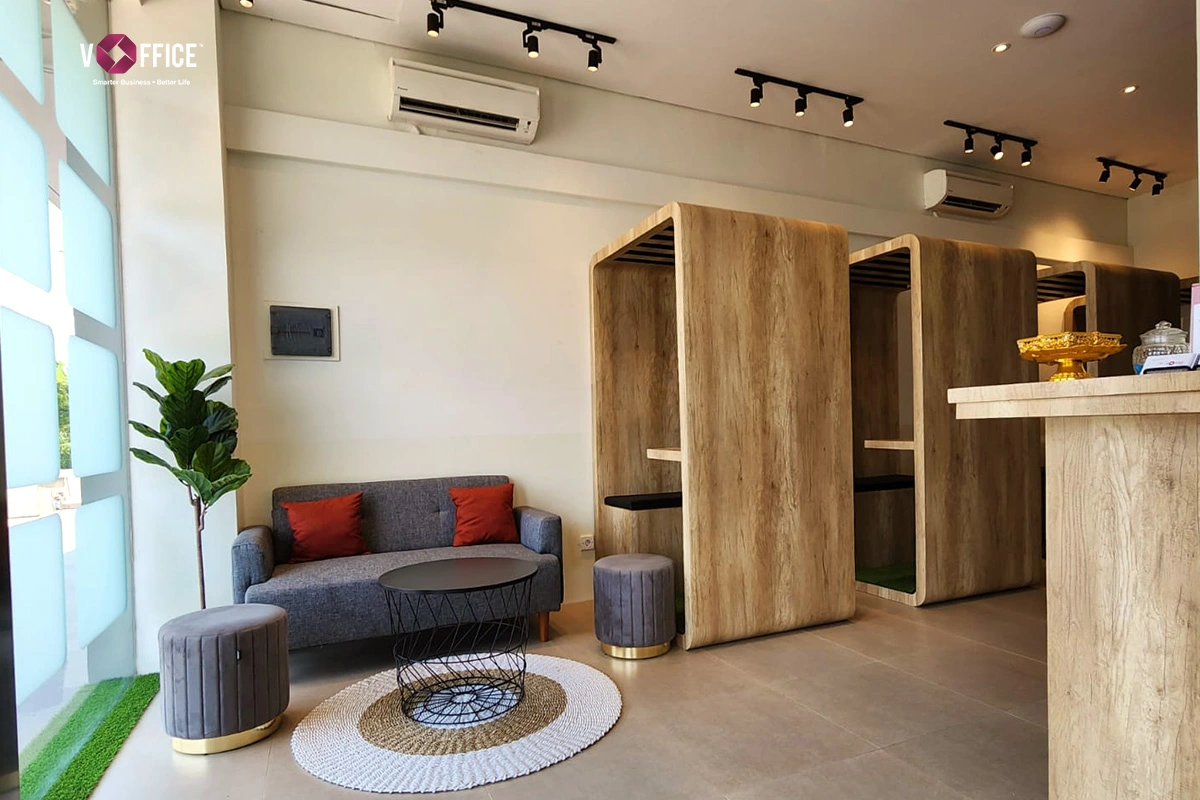
All vOffice locations are in officially designated commercial office zones, making them safe for OSS and KKPR licensing.
The Relationship Between ITBX and KBLI in Licensing
ITBX and KBLI work together within the OSS system. KBLI (Indonesian Standard Classification of Business Fields) represents your business activity code. The ITBX table in RDTR uses these KBLI codes to determine whether your activity falls under I, T, B, or X in a specific zone.
This means two factors must align before a business license can be issued: (1) your KBLI must accurately represent your business activity, and (2) your business location must fall within a zone where the classification is “I” or at least “T”/”B”.
A mismatch in either factor can halt the entire licensing process—even before the NIB is issued. Therefore, location planning and KBLI selection are the most strategic steps before formally establishing a business.
How to Read the ITBX Table in the OSS System
The easiest and official way to read the ITBX table is through the RDTR Interactive feature on the oss.go.id portal. Here are the steps:
- Access RDTR Interactive: Visit https://oss.go.id/id/rdtr-interaktif and accept the terms and conditions.
- Enter Coordinates or Address: Input the full address or precise coordinates of your desired business location. Accuracy is crucial because the system reads coordinates, not just street names.
- Identify the Zone Code: Observe the zone color and code on the map. Click the area to view zoning and sub-zoning details.
- Open the ITBX Table: The system will display the ITBX table listing KBLI codes along with their status (I, T, B, or X).
- Match with Your KBLI: Find your business KBLI and ensure it falls under “I” or at least “T”/”B” with manageable requirements.
If your location does not yet have an RDTR integrated into OSS, the system will direct you to the PKKPR (Preliminary Spatial Approval) mechanism, which typically takes longer.
Read Also: What If RDTR Is Not Available in OSS? Legal Solutions Explained
Real Risks of Ignoring ITBX Before Starting a Business
Many new business owners choose locations based on rental price, accessibility, or proximity to their target market—without checking ITBX status first. The consequences can be serious.
First, rental or land acquisition costs may be wasted if the location cannot be used for the intended business. Second, physical construction cannot begin because Building Approval (PBG) cannot be issued without a valid KKPR. Third, the NIB issuance process will be halted, meaning the business cannot operate legally.
In the era of PP No. 28 of 2025, choosing the wrong location is no longer a minor administrative issue—it is a structural barrier that can stop your business before it even starts.
Virtual Office and ITBX: Is It Safe for Licensing?
Many business owners ask whether virtual offices are safe in terms of ITBX RDTR. The answer depends on the location of the virtual office building.
Virtual offices located in Grade A office buildings within CBD (Central Business District) areas are typically in Office (KT) or Commercial (K) zones, where office activities fall under category “I” in the ITBX table. This means OSS licensing processes will run smoothly.
On the other hand, using a residential address (R zone) for commercial activities will most likely result in an “X” classification, leading to automatic rejection by OSS.

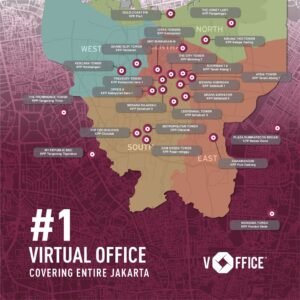
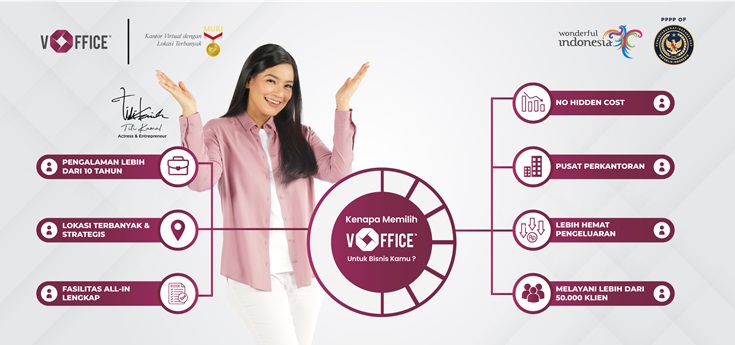
For business owners looking for a verified compliant address, using a virtual office in an officially designated commercial building is an efficient solution. All vOffice locations are situated in verified commercial office zones, ensuring compliance with OSS licensing from day one. vOffice has served over 50,000 clients and holds a MURI record as the provider with the most virtual office locations in Indonesia.
Explore vOffice Virtual Office options across Indonesia
ITBX RDTR and the Latest Regulations (2025–2026)
Government Regulation No. 28 of 2025, effective from October 2025, strengthens RDTR as the primary foundation for business licensing. Key updates impacting ITBX include:
- Massive integration: The government continues expanding RDTR integration into OSS. By the end of 2025, more than 800 digital RDTRs were recorded in the system.
- Fully automated validation: OSS no longer allows manual interpretation for locations with integrated RDTR. The system automatically blocks applications if KBLI falls under category “X”.
- More specific KBLI 2025: The updated KBLI includes additional codes. ITBX tables now reference the latest version, requiring businesses to ensure full alignment.
The right approach in this era is “RDTR-first”: check ITBX and zoning before signing lease agreements, establishing a company, or applying for NIB.
Check vOffice services for Company Registration Services (Free Virtual Office Bonus)
Establish Your Company with an ITBX-Compliant Address
The vOffice legal team assists you from KBLI selection, company registration, to NIB issuance without OSS obstacles.
Frequently Asked Questions about ITBX RDTR
What does ITBX stand for in RDTR?
ITBX stands for Permitted (I), Limited (T), Conditional (B), and Prohibited/Not Allowed (X). This table is part of RDTR zoning regulations and determines which types of business activities are allowed in each sub-zone.
Does ITBX apply to all types of businesses?
Yes. All businesses registering through the OSS RBA system will be verified based on the ITBX table. This applies to micro, small, medium, and large enterprises, including foreign-owned companies (PT PMA).
What if my KBLI falls under category X in my desired location?
The OSS system will automatically reject your KKPR and NIB applications. The best solution is to choose a different business location in a zone where your KBLI is classified as “I”. Make sure to check the ITBX table in OSS before signing any lease agreement.
Can a virtual office be used if the location falls under category I in ITBX?
Yes. As long as the virtual office building is located in an office or commercial zone with an “I” classification for your KBLI, the address can be legally used as your business domicile, and your OSS licensing process will run smoothly.
Do all regions in Indonesia already have RDTR integrated with OSS?
Not yet. As of December 2025, around 539 RDTRs have been integrated. For areas without integrated RDTR in OSS, the licensing process uses the PKKPR (Preliminary Spatial Utilization Approval) mechanism, which has a different procedure.
What is the difference between ITBX and KKPR?
ITBX is a table within RDTR that classifies whether a business activity is allowed in a specific zone. KKPR (Spatial Utilization Conformity) is an official document issued as proof that your business location complies with spatial planning. ITBX serves as the basis for evaluation when applying for KKPR.
References:
1. Government Regulation No. 21 of 2021 on Spatial Planning Implementation.
https://peraturan.bpk.go.id/Details/160494/pp-no-21-tahun-2021
2. Minister of ATR/BPN Regulation No. 11 of 2021 on Procedures for Preparation, Review, Revision, and Issuance of Substantive Approval for Provincial, Regency, City RTRW and RDTR.
https://atrbpn.go.id/
3. OSS RBA System — RDTR Interactive Information, Ministry of Investment/BKPM.
https://oss.go.id/id/rdtr-interaktif
4. Government Regulation No. 28 of 2025 on Spatial Planning Implementation (latest update).
https://peraturan.bpk.go.id/
5. Hukumonline — Government Urges Regional Authorities to Complete RDTR for OSS Implementation.
https://www.hukumonline.com/berita/a/pemerintah-minta-pemda-selesaikan-rdtr-untuk-kepentingan-oss-lt6128cca3d5d12/
6. Jakarta Spatial Planning Aspiration Portal — ITBX Activity Provisions.
https://jakartasatu.jakarta.go.id/pkrdtr/
7. KF Map — Understanding ITBX and Its Uses.
https://kfmap.asia/blog/mengenal-itbx-dan-kegunaannya/1494